
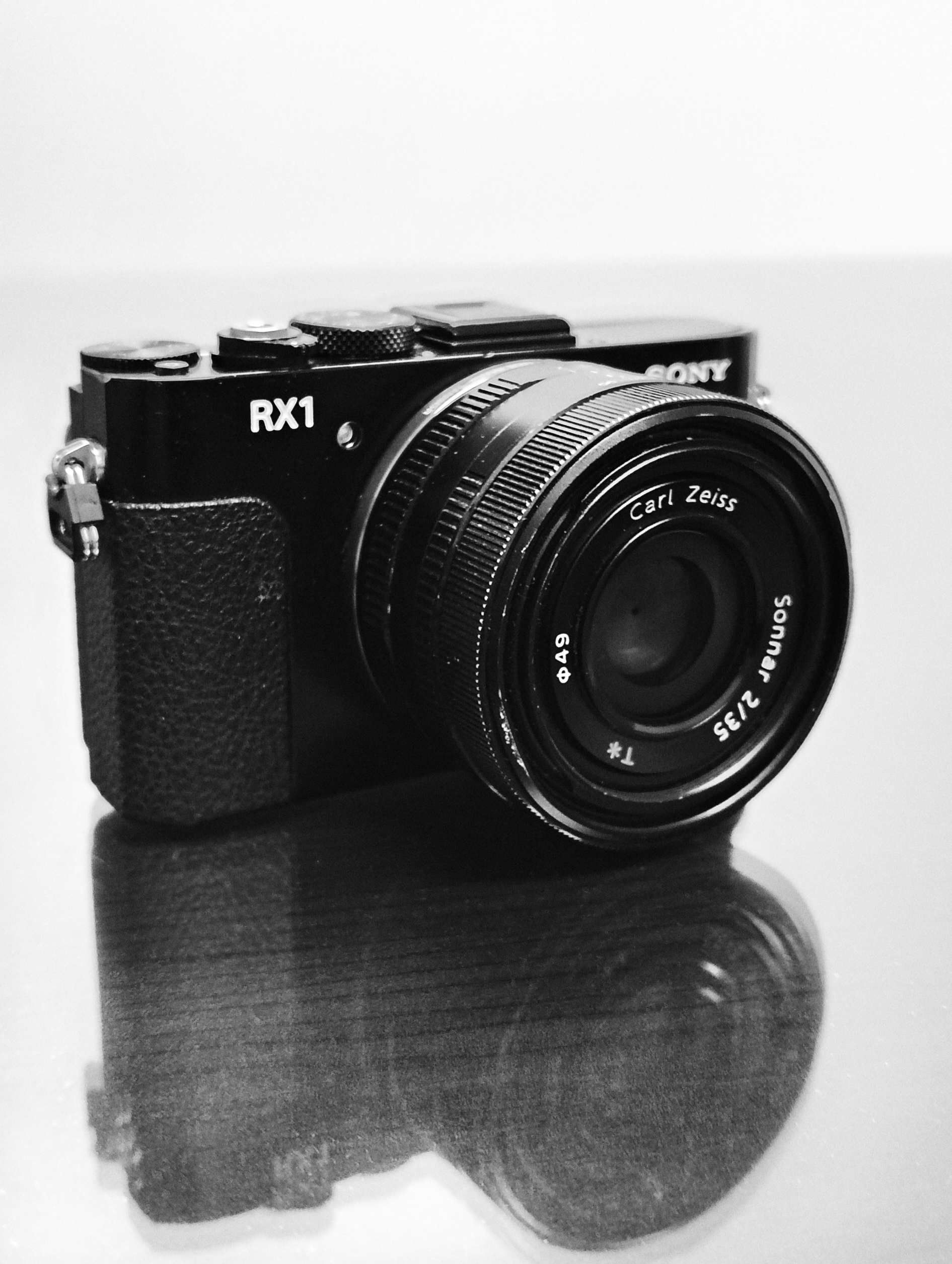
The Sony RX1 remains one of the most influential compact cameras ever created. More than a decade after its introduction and despite Sony revisiting the RX1 concept at dramatically higher price points, the original RX1 continues to hold its place. Its relevance in 2026 is not driven by nostalgia but by fundamentals that still matter: sensor performance, lens character, and the overall shooting experience.
This is a camera that quietly proves that good design does not expire quickly.
Why the Sony RX1 Still Feels Bold
When the Sony RX1 was released, it challenged long-held assumptions about what a compact camera could be. At the time, full-frame photography was closely tied to large bodies and interchangeable lenses. Carrying full-frame image quality usually meant committing to size, weight, and complexity.
The RX1 broke that mold by offering a full-frame sensor inside a body that was genuinely compact and designed for daily carry. This was not a compromise solution. Sony committed fully to image quality first and designed everything else around it.
Even in 2026, very few cameras strike this same balance. The RX1 remains small enough to live in a bag or jacket pocket while producing files that still stand alongside many modern full-frame systems. For street photography, travel photography, and everyday documentation, it continues to feel relevant.
A Lens and Sensor Designed Together
The defining feature of the Sony RX1 is its Zeiss Sonnar 35mm f2 lens. This lens was never intended to be replaced or upgraded because it is inseparable from the camera itself. Sony designed the RX1 as a complete imaging system rather than a body paired with an interchangeable lens.
This approach shows in the results. The lens delivers excellent sharpness across the frame, natural contrast, and a rendering that feels organic rather than overly corrected. The transition from focus to out-of-focus areas is smooth, and highlights are handled gracefully.
The full-frame sensor complements this lens perfectly. Together they produce images with depth, strong tonal range, and pleasing color response. Even by current standards, the files still look modern and flexible in post-processing.
Image Quality That Holds Up Without Chasing Numbers
It is easy to assume that older sensors cannot compete with newer ones. In practice, the RX1 continues to prove otherwise. The 24 megapixel full frame sensor delivers more than enough resolution for real-world photography while maintaining manageable file sizes and a smooth workflow.
Dynamic range remains strong, and the tonal transitions feel natural rather than brittle. These qualities matter more than headline specifications when it comes to everyday use.
Many photographers ask whether a higher resolution would improve the RX1 experience. For daily shooting, the answer is often no. 24 megapixels remains more than sufficient for prints, online sharing, and personal work. The RX1 prioritizes image quality over excess resolution, and that decision still pays off.
Living With Slower Autofocus in a Modern World
The autofocus system on the RX1 is slower and simpler than what most modern mirrorless cameras offer. It relies on contrast detection rather than advanced phase detection systems. In good light, it performs reliably. In lower light or complex scenes, it can hesitate or hunt. For some photographers,s this is a deal breaker. For others, it is simply part of the character of the camera.
Using the RX1 often feels similar to working with earlier full-frame DSLRs, where autofocus was not instantaneous but dependable when used thoughtfully. It brings to mind the experience of shooting with cameras like the original Canon 5D Classic, where many photographers learned to rely on the center focus point and technique rather than speed.
This slower autofocus encourages a deliberate approach. It rewards anticipation, composition, and timing rather than rapid-fire shooting. For photographers who enjoy a more intentional process, this becomes a feature rather than a flaw.
The Creative Strength of Simplicity
One of the RX1’s greatest strengths is its simplicity. There is one focal length, one lens, and no system decisions to manage. This removes distractions and shifts focus back to seeing and reacting.
Is a fixed 35mm lens limiting? It can be if you expect the camera to adapt to every situation. But for many photographers, this limitation becomes liberating. 35mm remains one of the most versatile focal lengths ever made, and learning to work within it often leads to stronger, more consistent work.
The RX1 encourages engagement with the scene rather than the equipment. In a time when cameras offer endless options, focus remains refreshing.
The Reality of Buying a Sony RX1 in 2026
Buying a Sony RX1 today almost always means buying second-hand. Usage history varies widely, and many units have seen heavy use.
The RX1 is known for a recurring issue commonly referred to as the E61 error, which is associated with lens or shutter-related failures. This issue is well known among long-term users and repair communities. Despite this, many sellers list RX1 cameras without fully understanding the risks or the camera’s history.
In my case, I purchased an RX1 through a live auction, and the E61 error appeared shortly after receiving the camera. After discussion with the seller, I accepted a partial refund that brought the final price to 215 USD. At that cost, keeping the camera made sense.
The E61 error appears occasionally,y and the manual focus dial is stiff due to a slightly bent lens barrel from poor care by previous owners. The camera clearly has heavy use behind it. Even so, at this price point, I believe I can realistically get a couple more years of use from it. More importantly, it remains enjoyable to shoot with and continues to produce images that feel rich and satisfying.
Buying a Sony RX1 in 2026 is a calculated decision. The risk is real, but so is the reward when the price aligns.
RX1, RX1R, and RX1R II in Practical Terms
Sony later released the RX1R and RX1R II as evolutions of the original concept. The RX1R removes the optical low-pass filter, which results in slightly sharper images but otherwise maintains nearly the same shooting experience.
The RX1R II adds higher resolution and modern features, but also introduces larger file sizes and significantly higher costs. While impressive on paper, these upgrades do not fundamentally change how the camera feels to use daily.
For many photographers, the original RX1 strikes the best balance between image quality, simplicity, and value. The later models command higher prices without delivering a proportionally better experience for everyday photography.
Is the Sony RX1 Still Worth Buying in 2026
Every RX1 available today is second-hand. Mileage varies, and the E61 error will likely affect most surviving units at some point. That said, the RX1 remains worth considering if the price is right.
If you can find one below 400 USD, it remains a compelling option. At that level, you are paying for lens character image quality and shooting experience rather than long-term reliability. The RX1R and RX1R II demand significantly higher prices without changing what makes the RX1 special.
For day-to-day photography, travel, street work, and personal projects, 24 megapixels remains more than enough. Paying significantly more for higher resolution often feels unnecessary when the core experience remains unchanged.
Final Thoughts
The Sony RX1 was never meant to be the fastest or most feature-packed camera. It was designed to deliver uncompromising image quality in a compact form with a clear creative focus.
It carries risk, and it demands acceptance of eventual failure. But it also delivers something many modern cameras struggle to provide: a cohesive, intentional, and deeply satisfying photographic experience.
For what it is worth, I am happy with my RX1. At 215 USD, it has already justified itself. Even with occasional E61 warnings and visible wear, it continues to inspire me to go out and shoot.
In 2026, that still matters.
 Sony RX1 | Zeiss Sonnar 35mm f/2 Lens | ISO 200 – 1/500 – f/2.8
 Sony RX1 | Zeiss Sonnar 35mm f/2 Lens | ISO 200 – 1/320 – f/2.8
 Sony RX1 | Zeiss Sonnar 35mm f/2 Lens | ISO 200 – 1/250 – f/2.8